
RV lot feasibility checklist: county rules, power, pad and wastewater for an RV on your property
The checklist for living in an RV on your own lot after a disaster: the published county rules from LA County and Maui County, the receptacle and pad measurements that match a national fleet, the wastewater plan, and the packet to send the adjuster.
Contact us
Share a few details. We will follow up with options that fit.
Key facts
- LA County: a County Disaster Recovery Permit under EO N-9-25 allows a manufactured home, mobilehome or RV, closing by January 16, 2028, not on a debris field.
- Maui County: temporary structures including RVs for 42 months plus one 18-month extension, after debris clearance, with sewer or approved wastewater and licensed electrical and plumbing work.
- 59 percent of reporting units on one national fleet are 30-amp; median length 32 feet (measured 2026-09-18).
- A county absent from the table is unchecked, not permissive.
The six checks
- Confirm the county's rule. Find whether your county has published a post-disaster temporary housing permit. Check debris clearance requirements, the permit deadline and whether the lot must be clear of debris before placement.
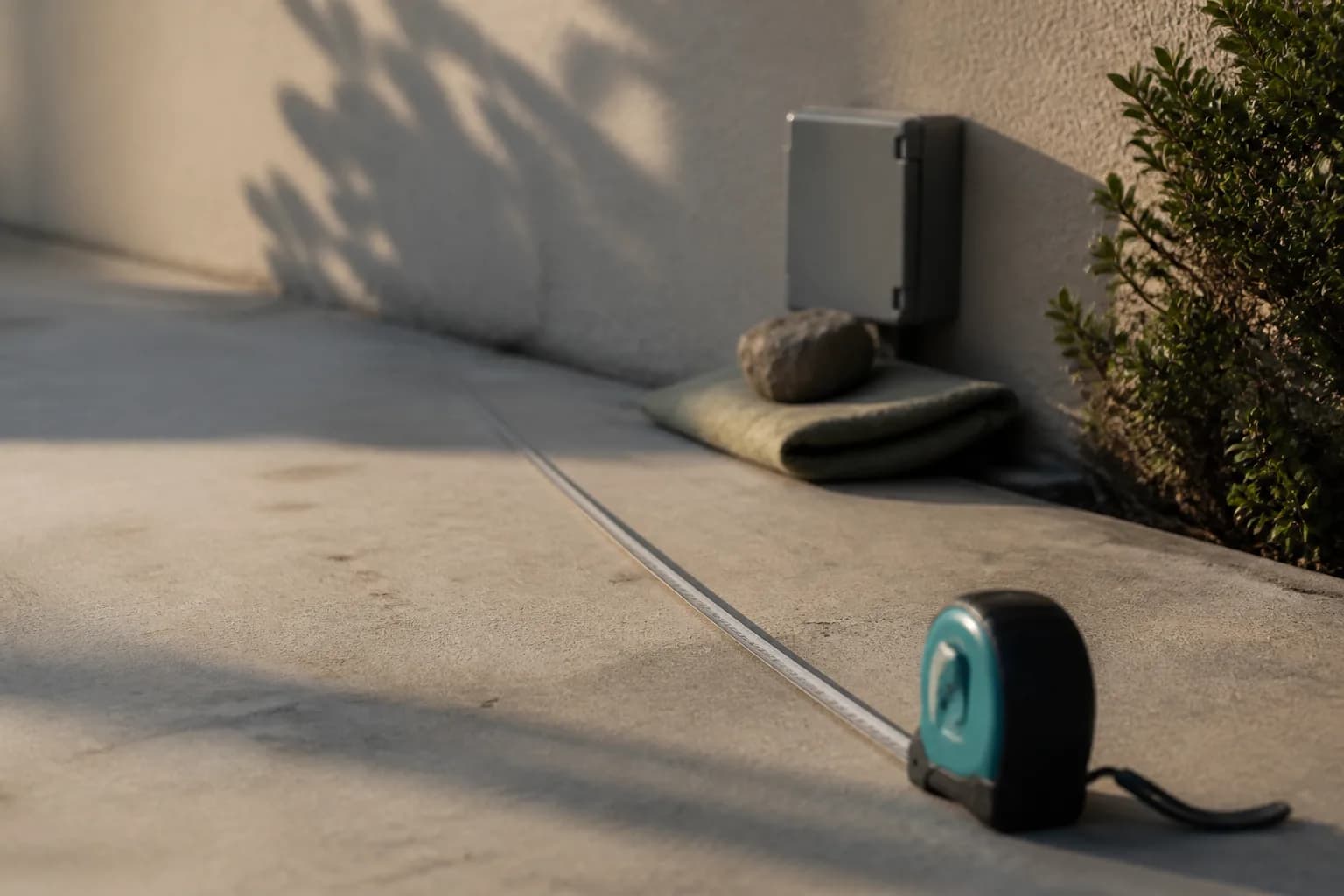
- Measure the pad. A level surface long enough for a 32-foot unit plus the tow or delivery vehicle, with overhead clearance for trees and wires on the approach.
- Quote the power. Ask an electrician for a TT-30 receptacle within cord reach, or a 50-amp receptacle if the unit requires it. A household 15 or 20 amp outlet is not a plan.
- Settle water and sewer. Potable water access with freeze protection, and a sewer hookup, septic approval or scheduled pump-out. Where the county requires approved wastewater, get that approval first.
- Check setbacks and the HOA. Property-line and septic setbacks, and the HOA's written position on a temporary unit during a rebuild.
- Send the packet. Put the county rule, the pad measurements, the electrician's quote and the wastewater plan in one email to the adjuster with the placement request.
What have counties published?
Two counties have published post-disaster on-lot rules. A county absent from this table is unchecked, not permissive.
| Jurisdiction | Instrument | Allows | Duration | Conditions |
|---|---|---|---|---|
| Los Angeles County (unincorporated areas)January 2025 fires | County Disaster Recovery Permit under California Executive Order N-9-25 | a manufactured home, a mobilehome, or a recreational vehicle as temporary housing on a fire-damaged residential lot | Temporary housing must close by January 16, 2028, or within 30 days after the executive order ends, whichever comes first. |
|
| Maui CountyAugust 2023 Lahaina fire | Ordinance 5685 and the Mayor's Emergency Proclamation Relating to Wildfires | temporary structures used for housing, including trailers and recreational vehicles, approved by the Office of Recovery | Permitted initially for 42 months, with one automatic extension of up to 18 additional months on application. |
|
What power and pad does the fleet need?
Fifty-nine percent of reporting units are 30-amp and the median unit is 32 feet long. Quote a TT-30 receptacle within cord reach and measure a level 32-foot pad plus approach clearance before delivery is scheduled.
When the lot fails, the next step is a monthly park pad, and the unit choice is on the RV fleet page.
Questions people ask
- Do I need a permit to live in an RV on my lot after a disaster?
- In LA County and Maui County, yes, and both publish the conditions. Elsewhere, ask the county permit office; the answer goes in the packet to the adjuster either way.
- What electrical service does the RV need?
- Most units need a 30-amp TT-30 receptacle within cord reach; four in ten need 50-amp. Ask the electrician for a written quote before the adjuster call. A household 15 or 20 amp outlet is not a plan.
- How big must the pad be?
- Level and long enough for a 32-foot unit plus the tow or delivery vehicle, with overhead clearance for trees and wires on the approach. Measure before delivery is scheduled.
- What about sewer?
- A sewer hookup, a septic approval or a scheduled pump-out. Where the county requires approved wastewater before placement, get that approval first; a park pad with sewer is the fallback.
- Can I live in an RV on my own lot during a renovation, rather than after a loss?
- That is a zoning question and the answer is often different from the post-disaster one, because the emergency permits counties publish are tied to a declared disaster. Ask the permit office about a temporary occupancy permit for a renovation or a rebuild before you book anything.
- Does the operator handle the site?
- No. The operator delivers to the site you prepared. The receptacle, pad, wastewater plan and permit are yours, and each is a document in the request to the adjuster.
What to do next
- Find whether your county has published a post-disaster temporary housing permit and its conditions.
- Measure the pad and the approach clearance.
- Get a written quote for a TT-30 or 50-amp receptacle within cord reach.
- Settle water and sewer, and the HOA's written position.
- Send the county rule, measurements, electrician's quote and wastewater plan to the adjuster with the placement request.
How we know
Each finding below names its source, what we did to it, what it means for you and what it costs to ignore. Figures marked measured decay and are re-measured before they are 60 days old.
Reviewed by Ben Kiser, long-term RV placement specialist. Published 2026-09-06. Updated 2026-09-07.
Sources
- LA County Recovers, Temporary Housing Permit Process (accessed 2026-09-06)
- Maui Recovers, Temporary Housing (accessed 2026-09-06)
- Outdoorsy public search feed, one national RV rental fleet (699 active units, measured 2026-09-18) (accessed 2026-09-18)
- Washington OIC, Additional living expenses coverage (accessed 2026-09-06)
Not sure which housing type fits?
Tell us your situation. We route you to education, a provider match, or LongTerm RV when an RV path makes sense.