
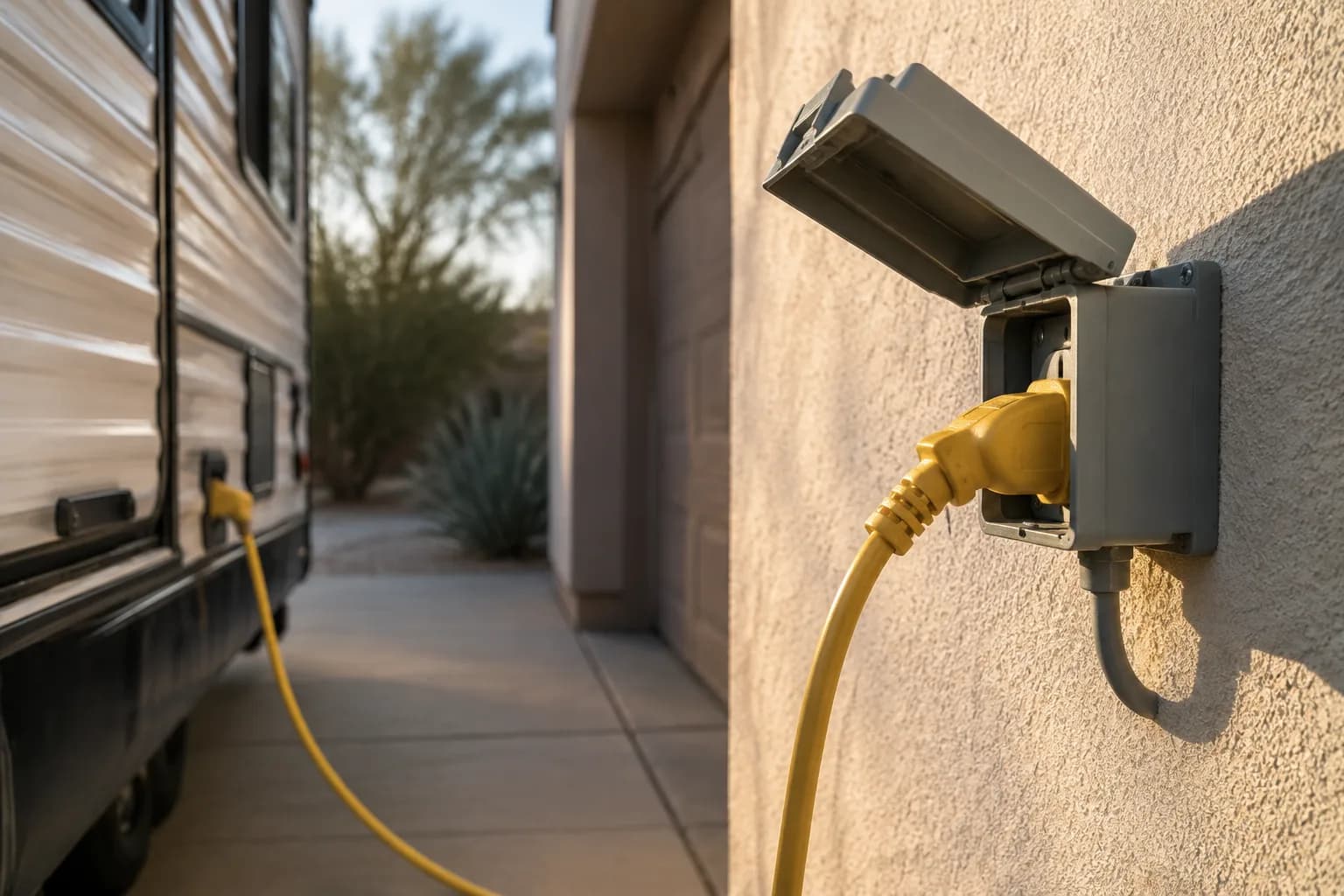
County RV zoning for temporary housing after you lose your home
Whether you can live in an RV on your own property during repairs is decided by your county or city, and it changes after a declared disaster.
Check your county RV zoning
Look up temporary RV occupancy rules by ZIP or county. Answers are research facts — not quotes, approvals, or nightly prices.
What is county RV zoning for temporary housing?
County (and city) zoning decides whether someone may live overnight in an RV on private property while a damaged home is repaired. Rules cover occupancy, permits, hookups, and how long a temporary stay may last. This is separate from ALE / Loss of Use insurance, which pays for housing but does not rewrite the zoning code.
Who decides: county, city, or none?
Unincorporated areas usually follow the county planning department. Incorporated cities and towns often enforce their own municipal code instead. A few places have little or no zoning. When a county row says authority is municipal, treat the county answer as a routing hint and confirm with the city. HOA covenants are not zoning; they can still block an RV even when the county allows one.
What does the permit process look like?
When temporary occupancy is allowed, counties often require a temporary occupancy, trailer coach, or similar permit, sometimes with building and environmental health sign-off. Fees and packet contents vary. Start with the planning office phone or URL on your county result, then ask what they need for post-loss temporary housing on your lot.
How long can you stay?
Max days are local. Some ordinances publish a hard cap; others renew in increments or leave duration to the emergency order. If our table shows "Not stated in available sources," do not assume unlimited stay. Ask planning for the current written limit.
What changes after a declared disaster?
Disaster declarations and local emergency ordinances can open temporary housing paths that do not exist in quiet times. Those exceptions often still need permits and may expire with the emergency. Pair zoning with RV temporary housing options and, when insurance is paying, your ALE documentation.
What should you do next?
- Run your ZIP in the checker above and note occupancy, permit, and status.
- Open your state page below for the full county table.
- Call the planning office on the result before you order a unit or claim a pad.
- If you need a delivered RV or park pad, see providers or contact us.
RV zoning by state
All 50 states and the District of Columbia. Open a state for its county table.
- Alaska30 boroughs
- Alabama67 counties
- Arkansas75 counties
- Arizona15 counties
- California1 verified
- Colorado64 counties
- Connecticut9 counties
- District of ColumbiaDistrict of Columbia
- Delaware3 counties
- Florida67 counties
- Georgia159 counties
- Hawaii5 counties
- Iowa99 counties
- Idaho44 counties
- Illinois102 counties
- Indiana92 counties
- Kansas105 counties
- Kentucky120 counties
- Louisiana2 verified
- Massachusetts14 counties
- Maryland24 counties
- Maine16 counties
- Michigan83 counties
- Minnesota87 counties
- Missouri115 counties
- Mississippi82 counties
- Montana56 counties
- North Carolina100 counties
- North Dakota53 counties
- Nebraska93 counties
- New Hampshire10 counties
- New Jersey21 counties
- New Mexico33 counties
- Nevada17 counties
- New York62 counties
- Ohio88 counties
- Oklahoma77 counties
- Oregon36 counties
- Pennsylvania67 counties
- Rhode Island5 counties
- South Carolina46 counties
- South Dakota66 counties
- Tennessee95 counties
- Texas254 counties
- Utah29 counties
- Virginia133 counties
- Vermont14 counties
- Washington39 counties
- Wisconsin72 counties
- West Virginia55 counties
- Wyoming23 counties
Questions people ask
Can I live in an RV on my own lot while my house is repaired?+
It depends on your county or city zoning rules, not on a single national rule. Many places ban overnight RV living on private lots unless a temporary occupancy or disaster exception applies. Use the checker above with your ZIP, then confirm with the planning office named in the result.
Who decides: the county, the city, or neither?+
Unincorporated land usually follows the county. Incorporated places often follow municipal zoning instead. Some rural areas have little or no zoning. The row for your county names the zoning authority when we have it.
Do I need a permit to stay in an RV during repairs?+
Often yes when temporary occupancy is allowed at all. Permit names and fees vary by county. Verified and researched rows list whether a permit is required when the source states it.
How long can temporary RV occupancy last?+
Duration is set locally when it is set at all. Some counties publish a max day count; others leave it case-by-case or only under a disaster order. Blank max-days fields mean the source did not state a number, not that stays are unlimited.
What changes after a declared disaster?+
Counties and cities sometimes authorize temporary housing (including RVs) for a limited window after a disaster declaration. Those exceptions are separate from baseline rules and may need planning, building, and health approvals.
What does verified mean on this site?+
Verified means our placement team confirmed the row with planning staff by phone or email, or with an ordinance URL plus section that meets our review standard. Researched means desk research from ordinances. Not yet researched means we have the county name but have not compiled zoning rules yet.
Copy for AI
Related: RV temporary housing, ALE insurance housing, providers, contact.
Contact us about your lot
Share a few details. We will follow up with options that fit.
Not sure which housing type fits?
Tell us your situation. We route you to education, a provider match, or LongTerm RV when an RV path makes sense.